The Dodge Paddle Shifter Upgrade Explained
What a paddle swap changes on an automatic Challenger, Charger or Durango, how the mount behind the rim decides the fit, and what to test before the drive home.
Read More →Guide · 10/9/2026
How carbon fiber, Alcantara and perforated leather behave on a Dodge steering wheel: where each material belongs, how it ages, and what suits a Challenger or Charger.
Three surfaces do most of the work on a Dodge rim, and each one behaves differently after a summer in the sun. The carbon layer adds structure and contrast. The nap brings grip and silence. The perforated surface handles the ordinary miles. The right answer depends on where the car lives and how it gets driven.
A material choice also decides how much upkeep the wheel asks for. The notes below cover what each surface does well on a rim. They also explain how each one ages on a Challenger, a Charger or a Durango.
Leather is the working surface. It takes the wear from palms, and it tolerates the heat that builds in a parked car. The nap sits above it for grip and for the quiet that comes with a matte surface. The carbon layer is structural and visual, and it usually has no grip role at all.
That division is why a mixed rim works so well on these cars. Your hands meet leather and Alcantara, while carbon covers the areas they touch least.
The carbon layer belongs on the top and bottom sections of the rim, on the spoke faces, and around the button pods. Those places catch the light without asking for a firm grip, so a woven or forged surface can stay decorative.
A forged finish has a marbled pattern rather than a weave. It hides small marks better than a gloss weave, which suits a car that sits outside. A gloss finish shows more depth, and it rewards an owner who keeps a cloth in the door pocket.
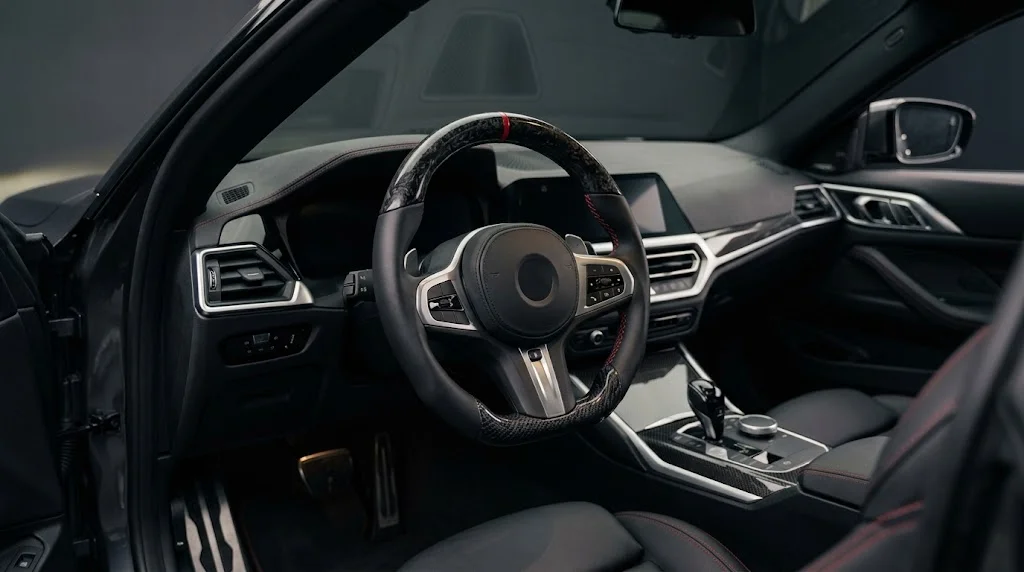
The wheel above shows the three surfaces together in a Challenger cabin. Each one sits where it does the most good.
The suede nap returns the firmest grip of the three, and it reflects almost nothing. That helps on a bright afternoon when a leather rim turns into a mirror. It also keeps a Dodge steering wheel materials package looking purposeful.
The material gathers oils from bare hands. A soft brush every few weeks keeps the nap alive, and gloves make the difference on long trips. Owners who enjoy that routine rarely go back to leather on the grips.
The perforated surface lets air reach the palms, so the grip stays dry in traffic. It wears slowly, cleans with a damp cloth, and matches the factory trim on most SRT and Hellcat interiors.
For a car that carries passengers every day, this is the surface that ages best. It also hides the shine that builds up where hands rest at nine and three.
Climate and use decide more than taste does. A Dodge steering wheel materials choice is easier once the weekly mileage and the parking situation are written down.
| How the car lives | Grips | Rim sections | Stitching |
|---|---|---|---|
| Daily driver in a hot state | Perforated leather | Matte carbon | Silver or grey |
| Drag nights and weekend use | Alcantara | Forged carbon | Red or orange |
| Garage queen | Smooth Nappa | Gloss carbon | Matched to paint |
| Family Durango | Perforated leather | Matte carbon or leather only | Factory grey |
A single material can work on a whole rim as well. Owners who want the factory look often choose leather throughout and leave the carbon to the spokes.
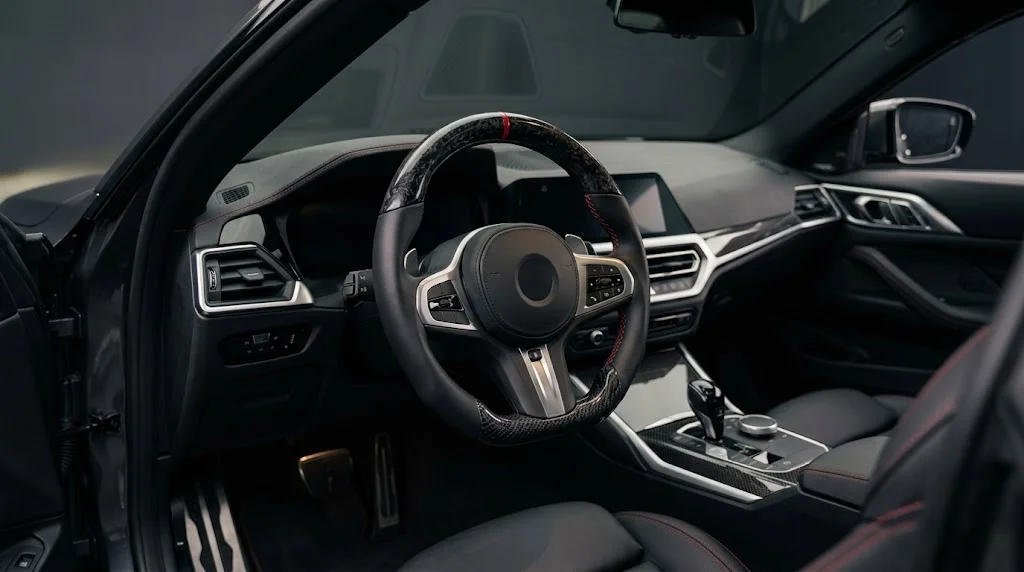
Four items answer almost every question. Send the model year and the full option list first. Then add a daylight photograph of the wheel face, and one of the rear with the airbag out.
Have these ready before you write to us:
The images show us the button frame, the connector shape and the space behind the airbag. Tell us whether the car has paddles, a heated rim, or a performance page in the instrument cluster. We cut nothing until the match is confirmed.
A mixed build follows a simple pattern. The list below is the arrangement we use on most Charger and Challenger rims.
Seams follow the material changes, which is why the layout is agreed before anything is cut. Moving a seam later means a new cover, not a small adjustment.
A material change should not cost you a working switch. Every build reuses the frame and the loom already fitted to your car.
| Function | Typical outcome |
|---|---|
| Airbag | Original module reused; the cover is built to suit it |
| Multifunction buttons | Retained when the original frame goes back on |
| Paddle shifters | Kept on cars that have them, with cut-outs made at order |
| Heated rim | Depends on the element and trim; confirm from your car |
The nap over a heating element warms more slowly than leather, and that trade is worth knowing before the build. A photograph of the rear of the wheel shows us what sits behind the rim.
Rebuilding your own wheel keeps the electronics as Dodge assembled them. The frame, the loom and the paddles all stay standard, and the original parts come back with the finished order.
A newly made core is the other option. Your factory wheel stays in the garage, which suits a leased car that has to return to standard. On an older Charger, used wheels are common enough that a donor core usually costs less.
An airbag sits at the centre of this job, so give the work to someone qualified. Isolate the battery and let the car power down fully before a fastener is loosened. Follow the Dodge procedure for your chassis rather than a general guide found online.
Set the module down on something soft and away from the work area. Tighten the centre fastener to the figure in the workshop manual for your car, and treat that number as the only source. Afterwards, drive a short distance and confirm the rim sits centred.
Test every switch, the paddles if they are fitted, and the horn. A warning lamp that stays lit means the car should be read before you drive further.
Warranty questions follow any change of this kind. An aftermarket steering wheel does not automatically void a vehicle warranty under U.S. federal warranty law, but warranty coverage can still depend on whether the modification caused the specific failure being claimed.
Where the factory module, the wiring and the vehicle specific parts are reused, further coding may not be needed. The cover changes and the electronics carry on as before.
A car that gains a function it never had is the other case. The control unit may then need to learn what is present, and a workshop visit becomes likely. Coding is a possible step rather than a certainty, and the answer depends on your car.
Most problems trace back to one of three causes. A wheel from another year often carries the same badge but a different button frame. The nap fitted over a damaged heating mat leaves a cold patch that no amount of brushing will fix.
Driver assistance hardware is the third cause. Cars with hands-on detection carry sensing parts inside the factory rim, and those parts have to be reused or matched. Mention the assistance pack with your photographs and we will allow for it.
Upkeep differs by surface, and the routine is short. The carbon wants a soft cloth and no abrasives. The suede wants a brush and a little patience. The leather wants a damp cloth and a balm twice a year.
Sun does more damage than hands do. A windscreen shade during the summer months keeps every surface on a Dodge steering wheel materials build in better condition.
The perforated surface lasts longest in daily use, and the suede nap holds up when it is brushed. Carbon shows the least wear because hands rarely rest on it.
Yes, and it is the arrangement most Hellcat owners choose. The upper rim takes carbon, the grips take Alcantara, and the lower section takes leather.
It stays cooler than leather in direct sun because it reflects more light. The nap does hold warmth in winter, which most owners treat as a benefit.
No. The airbag sits behind its own cover, and the carbon is a surface layer. A photograph of the rear helps us match the frame.
Ten to fifteen working days in production, then fifteen to twenty days for shipping. Expect twenty-five to thirty-five days from order to delivery.
Only for a rebuild. A new core leaves your factory wheel with you, which suits a car that has to go back to standard.
Every rim is made after your order arrives, in the Guangzhou workshop our own team works in. Thirteen or more years of design, engineering and precision manufacturing sit behind the patterns we hold. The material layout is checked against your chassis before the first cut.
Surface, stitch and shape stay your decisions. Orders ship tracked worldwide with a three-year warranty and thirty days for returns via an RMA request. The same team answers questions through the build.
Two other guides answer what owners ask next. The Challenger and Charger SRT guide covers the trims in more depth. The flat bottom versus round comparison explains how shape changes the feel.
The full range sits in the shop, and the Dodge pages are Dodge fitment, the Challenger listing and the Charger listing.
Say which car you drive and how it is used, then add the year, the option list and the two photographs. We will reply with a confirmed build and a date before work starts.
Two catalogue entries suit the cars owners bring to us most often. The first is the forged carbon wheel listed for the Charger SRT with LED shift lights. The second is the matte carbon wheel for the SRT Charger and Durango. Both are built to the layout we agree with you, and that agreement is the heart of the Dodge steering wheel materials conversation.
For background reading, the installation guide covers the battery and airbag sequence, and the FAQ collects the questions owners raise most. The about page describes the workshop, and fitment or delivery questions can go to the contact page. Lead times are listed in the shipping policy, and returns fall under the return and refund policy. The Magnuson-Moss Warranty Act sets the federal minimum standards, and NHTSA covers air bag safety. Questions about materials can go through the inquiry form.
What a paddle swap changes on an automatic Challenger, Charger or Durango, how the mount behind the rim decides the fit, and what to test before the drive home.
Read More →How to clean carbon fiber and Alcantara on a Dodge steering wheel: a ten minute routine, the cloths to use, and the products that damage both surfaces.
Read More →How to fit a Dodge steering wheel safely: isolating the battery, handling the airbag module, marking the spline, and the checks that follow the swap and the details that follow.
Read More →